
His birth year comes from Laughlin himself.
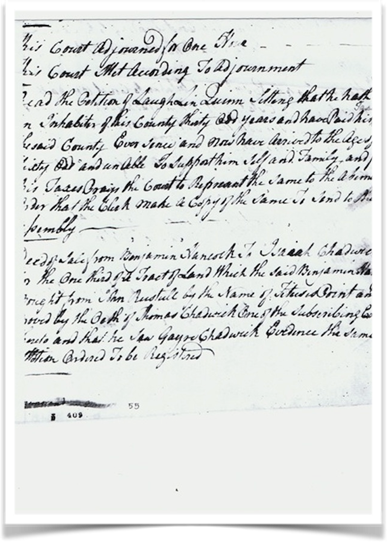
March 1772 · Carteret County Court of Pleas and Quarter Sessions. Select the image to examine the surviving copy at full size.
Laughlin Quinn had been an inhabitant of the county for “thirty odd years,” had paid his taxes there ever since, and had “arrived to the age of sixty years.”
In March 1772 Laughlin represented himself to the Carteret County court as sixty years old while petitioning for relief from taxation.
1772 − 60 = c.1712. This is the evidentiary basis for the estimated birth year. It is not a birth record and should not be presented as an exact date of birth.
Laughlin stated that he had lived in Carteret County and paid taxes there for “thirty odd years.” The phrase establishes long residence but does not provide an exact arrival year.
The document does not state where Laughlin was born, who his parents were, or where he lived before Carteret County.
The surviving life, record by record.
A record identifies a Laughlin Quin marrying Ann MacLaughlin at Cow Lane, Dublin.
Laughlin Quin appears in the surviving photographed payroll for Thomas Lovick's Carteret County militia regiment during the Spanish Alarm. The original images are now reproduced below. On the 10 September duty list, Laughlin Quin, Sergeant Thomas Canaday and Richard Canaday appear in the same 35-man group.
The research record describes Thomas Lovick assigning Loflin Quin, identified as a planter, 100 acres near Jumping Run Creek/Bogue Sound and flax seed in 1749; the following year he relinquished the tract as unsuitable for flax.
Loflin Quin is recorded as a witness to a Samuel Whitehurst deed involving land on Bogue Sound.
Laughlin appears in the surviving tax material preserved in the research archive.
The Carteret court record places Loflin Quin among men appointed in connection with laying out a road.
The research archive preserves an image associated with the 320-acre Carteret County grant to Laughlin Quin.
Carteret County court proceedings again place Loflin Quin among men ordered to lay out the road toward New Bern.
Laughlin's will names his wife Mary Quinn, formerly Mary Canaday; son William; daughter Margret; and son Thomas. Thomas receives “the plantation where I now dwell.” Mary is named executrix and James Frazer executor.
Laughlin tells the Carteret court he has lived in the county for “thirty odd years,” paid taxes there throughout that period, and has reached sixty years of age.
The North Carolina Assembly orders that “Loftin Quinn” of Carteret County and others be exempt from paying public taxes and doing public duties.
Governor Josiah Martin's endorsement records that the will was proved by William Coale and that executor James Frazer qualified. This establishes that Laughlin was deceased by the probate date; it does not establish an exact death date.
The Spanish Alarm payroll — original record images.
The three photographs below were recovered from pages 24–26 of the Book of Clues. They are photographs of the underlying handwritten militia record, not modern recreations. They are presented at full size for direct examination, with the published DocSouth transcription retained as a reading aid.
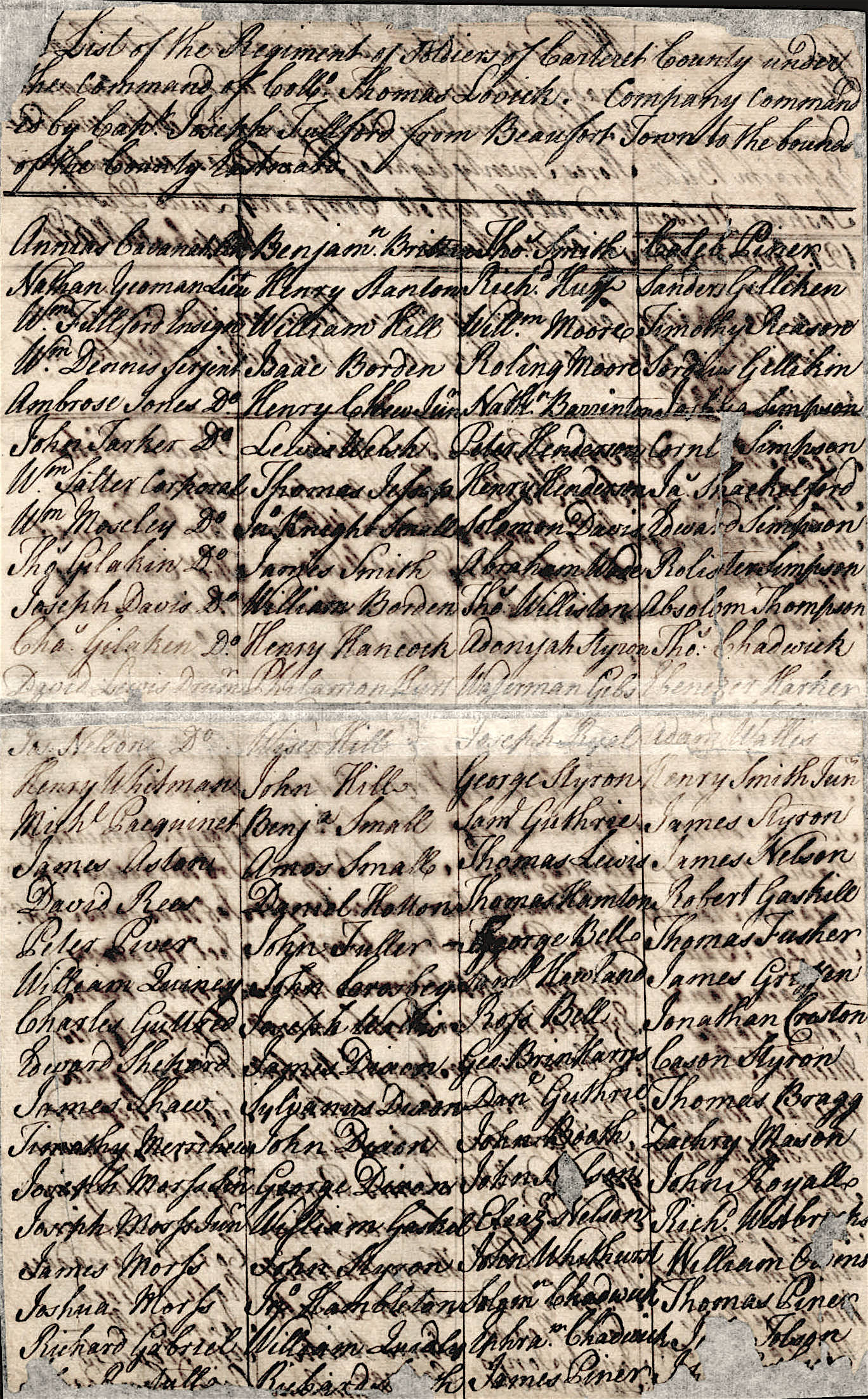
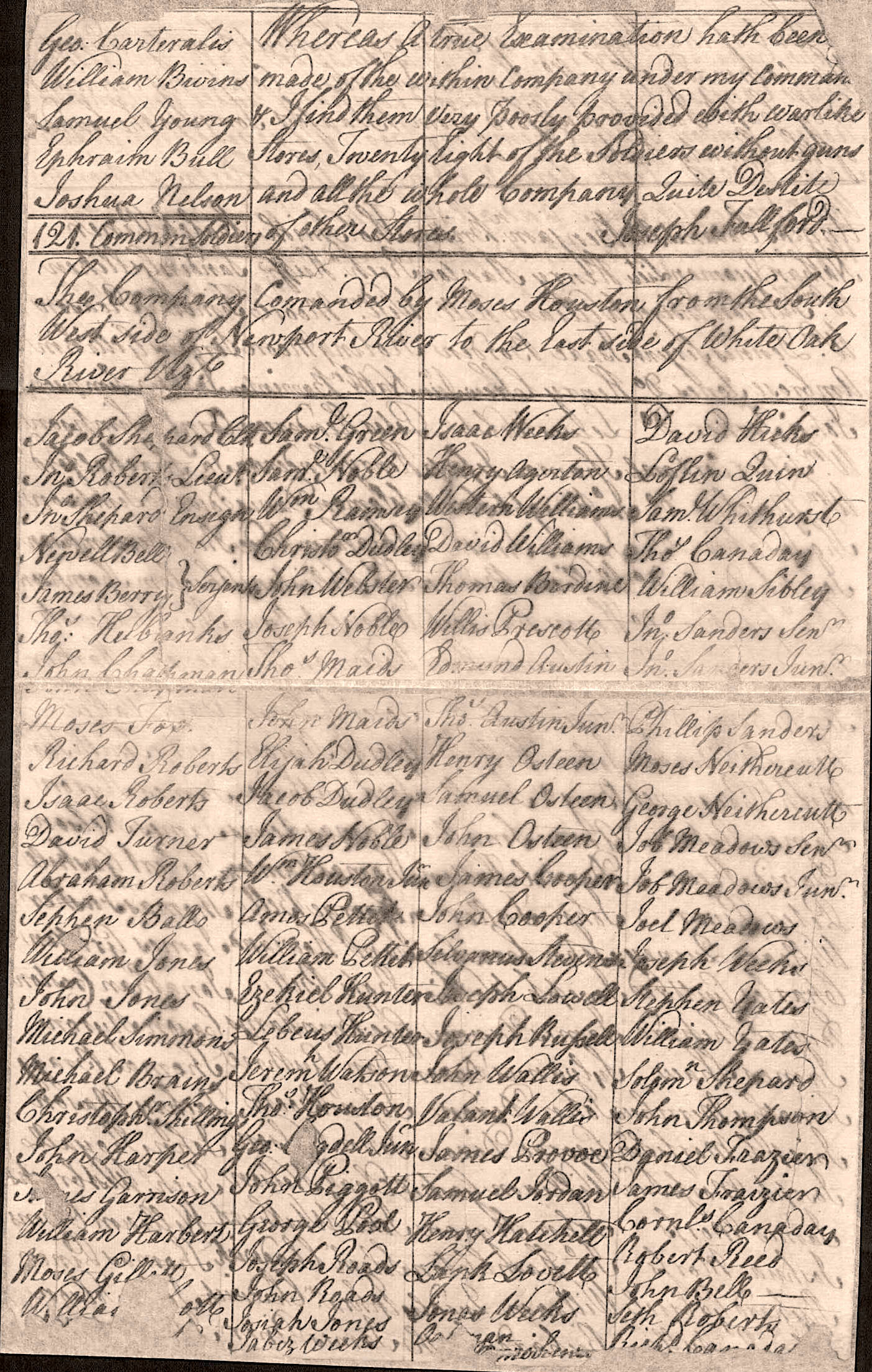
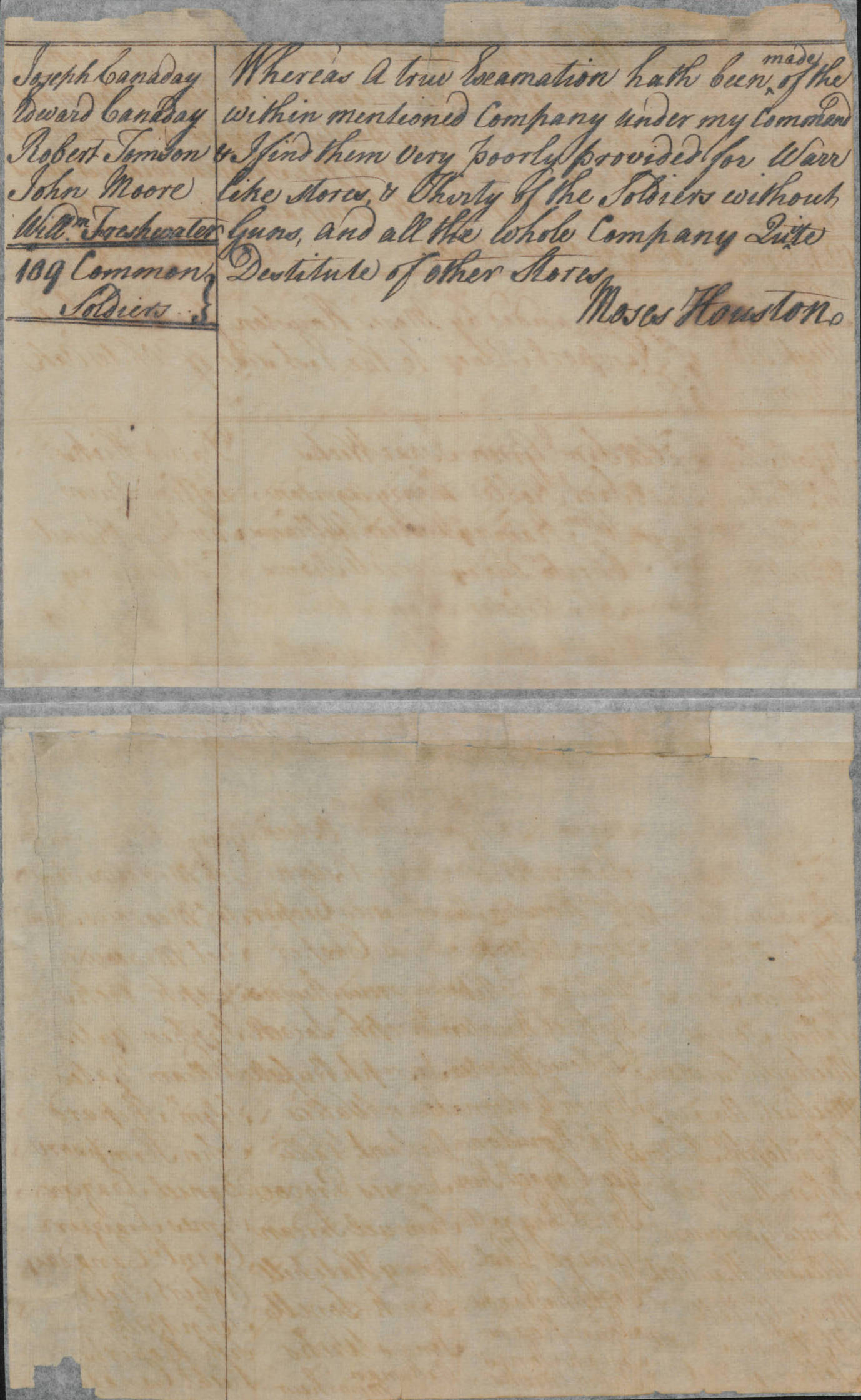
“Thos. Canaday, Sergt. 6 days.” “Richd. Canaday 6 days.” “Laughlin Quin 6 days.”
Thomas Canaday, Richard Canaday and Laughlin Quin occur in the same 10 September duty group. Thomas Canaday is identified as a sergeant.
The 26 August portion also records Thomas Canaday, Richard Canaday and “Cornel Canaday.” The document therefore places multiple Canaday men within the same Carteret militia record in which Laughlin later appears.
Nineteen years later, Laughlin's 1766 will identifies his wife as “Mary Quinn formerly Mary Canaday.” The 1747 payroll establishes a documentary Quin–Canaday association in Carteret County; it does not by itself establish Mary's relationship to Thomas, Richard or Cornel Canaday.
Source: Payroll for Thomas Lovick's Regiment of the North Carolina Militia, 14 June–10 September 1747, Colonial and State Records of North Carolina, vol. 22, pp. 262–268, CSR22-0046. The photographs above were preserved in Allen Quinn's research compilation.
Source Material
These are the Laughlin-related source images and research collections presently recovered from the QuinnGenealogy archive. A document is not promoted to “original source” merely because it appears in a research compilation; missing underlying archival pages remain identified as missing.
1772 Carteret Tax-Relief Plea
Key evidence for Laughlin's stated age of sixty and “thirty odd years” of Carteret County residence.
Examine document →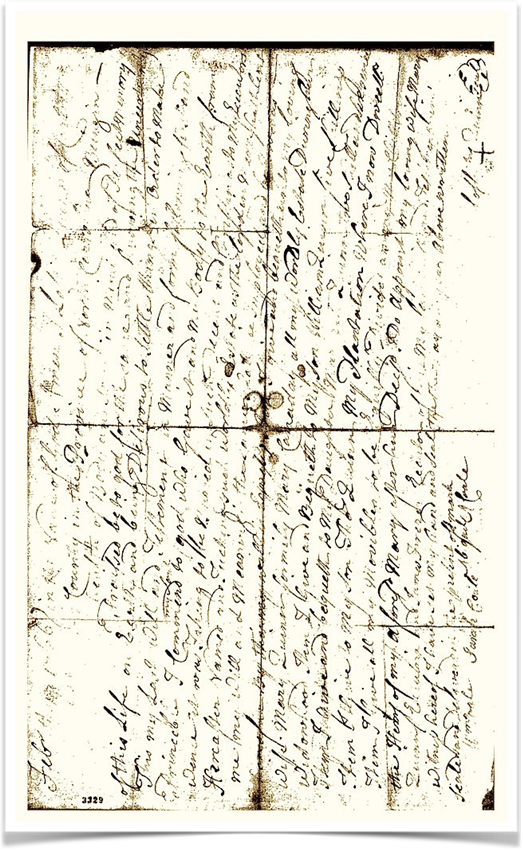
1766 Last Will and Testament
Surviving will image preserved in the research archive.
Examine document →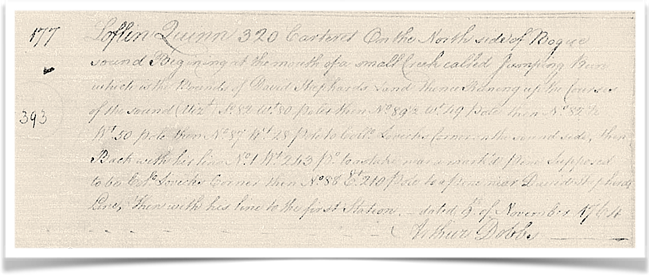
1764 Land Record
Image preserved with the research discussion of the 320-acre grant.
Examine document →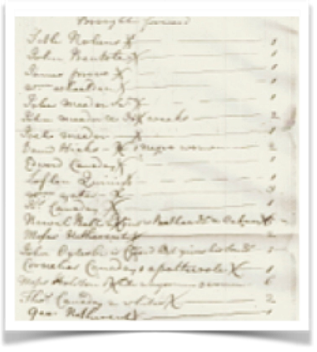
1747 Spanish Alarm — Original Record
Three photographs of the handwritten militia record are now preserved here. The 10 September list places Laughlin Quin in the same duty group as Sergeant Thomas Canaday and Richard Canaday.
Examine all three original images →1747 Spanish Alarm — Published Transcription
Colonial and State Records of North Carolina, CSR22-0046, vol. 22, pp. 262–268. Retained alongside the original photographs as a reading and comparison aid.
Open DocSouth transcription →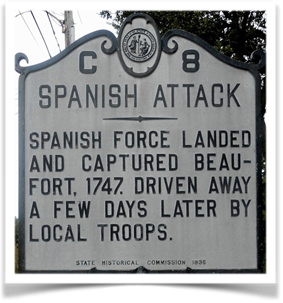
1747 Spanish Attack Historical Marker
Historical context image, not the militia payroll itself.
Examine image →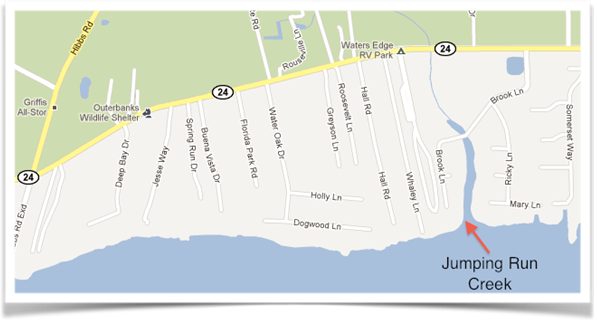
Jumping Run Creek Research Map
Research geography associated with the 1749–1750 land discussion; not a primary record.
Examine map →Book of Clues — Laughlin Quin Research
Allen Quinn's compiled research. Useful for locating records and preserving research history; it is not a substitute for the underlying records.
Open research compilation →Ann Brooks Kendall — The Abner Quinn Family
Ann's organized genealogical theory. Preserved as analysis/reconstruction, not as an underlying primary source.
Open theory →Collection rule: Source record → compiled research notes → genealogical theory → present analysis. Each layer remains distinct.
Name variants and identity
Laughlin, Laurence, Loflin, Loftin, Quin and Quinn forms remain visible as source spellings or research variants. They are consolidated only where the documentary evidence supports a single identity. Unresolved name/identity problems remain unresolved.
Earlier research provenance, including Rachael Shultz's 1998 work, remains attached to the research history rather than being rewritten as an original record.